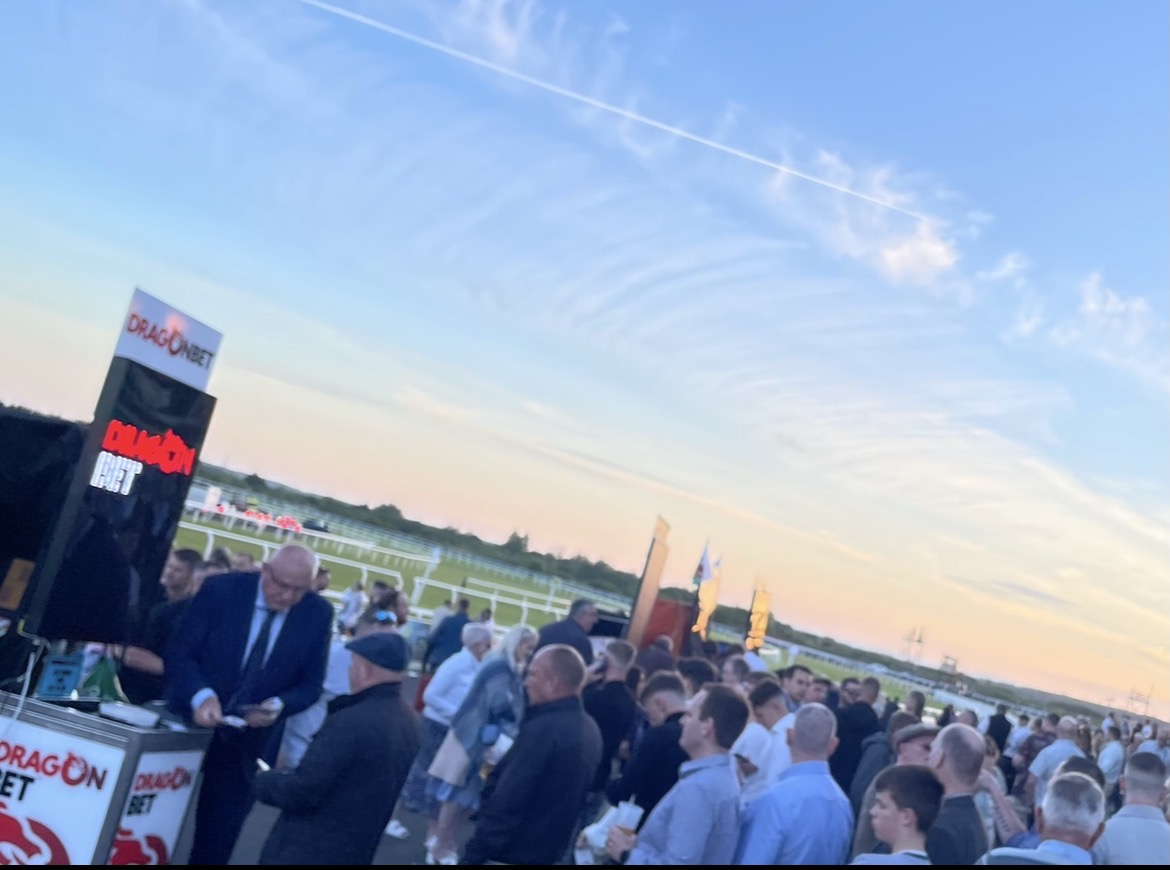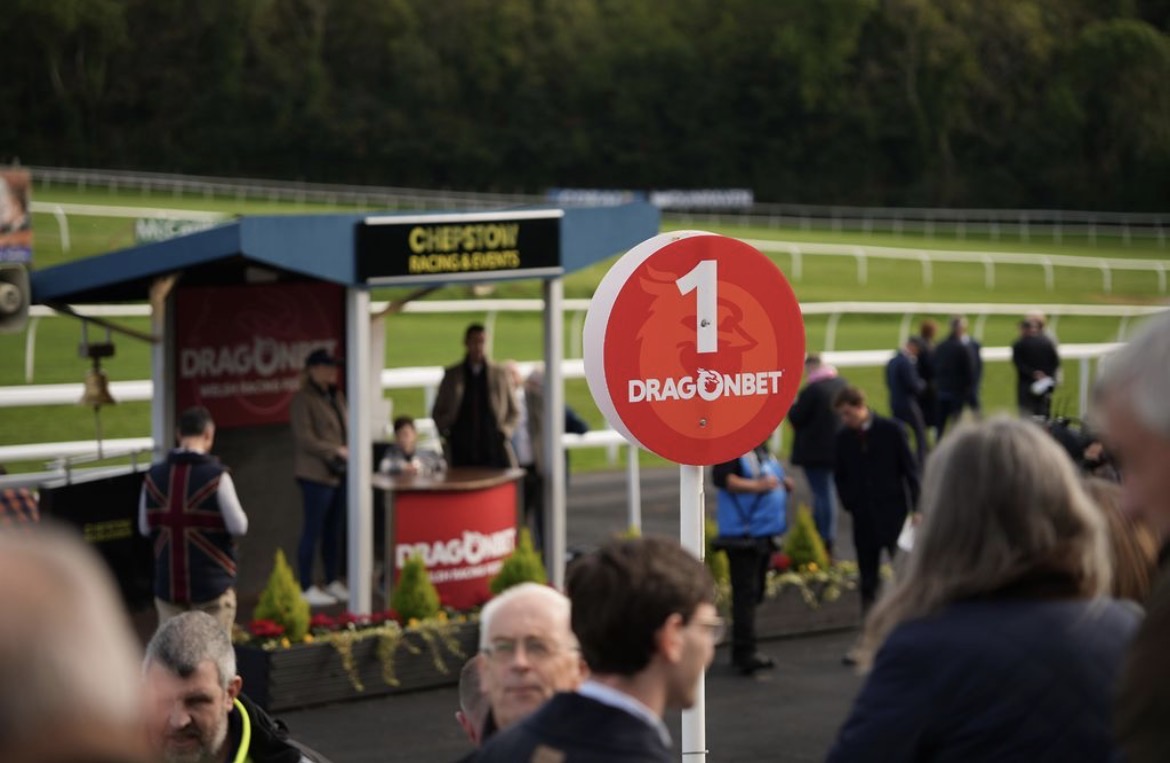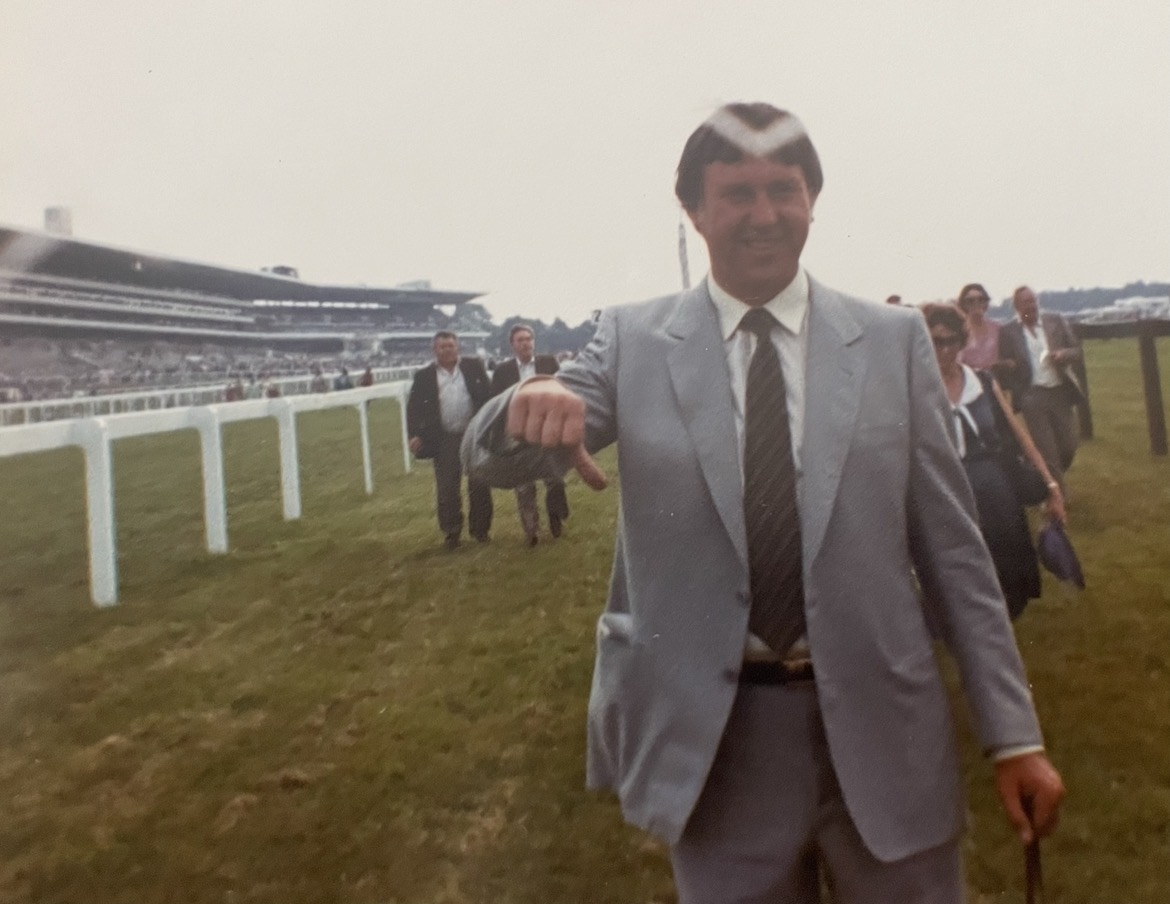

People often ask what it means when an on-course bookmaker says they own a “pitch”.
They usually assume it means we own a particular piece of ground at a racecourse in the UK. We don’t. A pitch is essentially a position on a list which, subject to the rules and arrangements at that racecourse, determines when we get to pick where we stand in the betting ring — at least until the current UK contracts run out in 2052.
The lower your number, the earlier you choose. The earlier you choose, the better your chance of securing a position with strong footfall: outside a busy bar, opposite the hospitality areas, close to the paddock or directly on the route taken by racegoers moving between the stands and the track.
The simplest comparison is with retail property. A leading pitch is like having a shop on the busiest part of the high street. A position on the back line can be more like operating from a side street.
You may be selling the same stuff, but vastly different numbers of people will walk past your betting board.
That is why one bookmaker’s pitch might be worth only a few hundred pounds while another can command six figures.
The days of “dead man’s shoes”
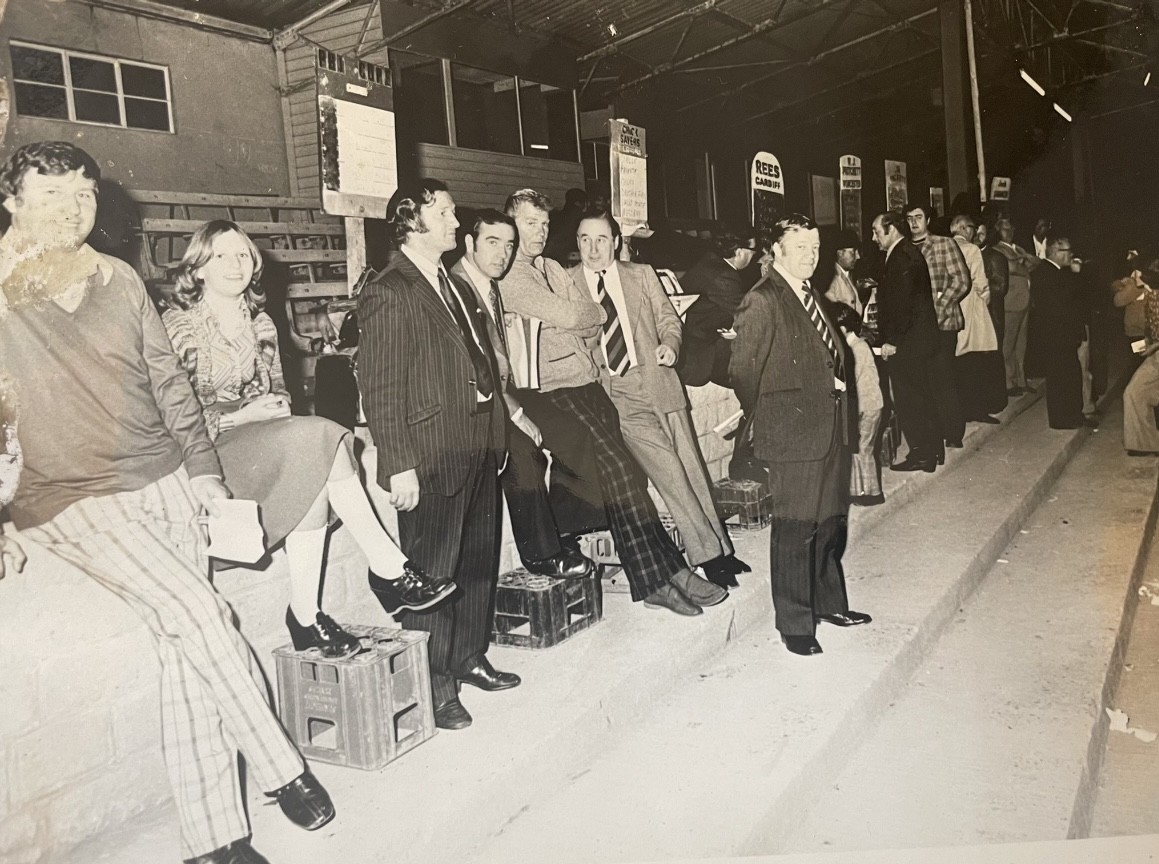
For generations, racecourse pitches were effectively inherited.
A bookmaker built up seniority over many years and could pass that position down to a son who worked alongside him. The best positions therefore tended to remain in the hands of established bookmaking families.
Go back further and the history is rather darker. Criminal gangs once exerted control over parts of the racecourse betting world, deciding who could work and demanding money from bookmakers for “protection”. The so-called razor gangs fought for control of pitches and extorted bookmakers during the early twentieth century, particularly in the years after the First World War.
Some readers will have heard of Billy Kimber and the Birmingham Boys, not least because of Peaky Blinders, or the London-based Sabini gang.
One of the most notorious incidents was the “Epsom Road Battle” in 1921. A large group of Birmingham gang members attacked men they believed to be associated with the Sabinis near Epsom. The prosecution and imprisonment of numerous Birmingham Boys weakened Kimber’s organisation and helped the Sabinis establish dominance over the southern racecourses.
During the later 1920s, the authorities, the Jockey Club and bookmakers’ organisations took stronger action. Measures were introduced to curb the gangs’ influence over pitch allocation, while increased police attention made large-scale racecourse racketeering more difficult. More formal systems of pitch lists and seniority developed in place of criminal control.
That system became known as “dead man’s shoes”. If you were a young bookmaker trying to break into the game, you might have been waiting for somebody ahead of you to retire or die before you moved meaningfully up the list.
That all changed in October 1998, when a system allowing pitch seniority to be transferred through buying and selling was introduced.
It was controversial and caused an enormous shake-up within the betting ring, but it also allowed fresh blood into the game.
Before then, many of the leading positions were controlled by older and generally wealthier bookmaking families. They had benefited from years, and sometimes generations, of income from pitches occupying the best locations.
Because they already had the footfall, they did not always need to be particularly aggressive with their prices. The customer was already standing in front of them.
The newer entrants were different. They had borrowed or invested significant amounts to buy their way up the lists and had that expenditure to recover. They were younger, hungrier and usually needed to compete harder for every bet.
Traditionally, punters often knew that the best price could be found by walking through the front line and looking towards the bookmakers standing at the back. Those bookmakers had to offer something better to compensate for their poorer location.
Once pitches could be bought and sold, that dynamic began to change. New operators could buy their way into stronger positions and then compete aggressively on price. Odds became more closely aligned throughout the ring and, as a result, the number of people walking directly past your board became even more important.
Then came the betting exchanges
The growth of betting exchanges caused another seismic change in the betting ring. Mice became lions. Bookies who used to “bluff” a bet of more than £100 were suddenly asking punters if they wanted any more on.
Before exchanges became influential, bookmakers were much more likely to take their own view of a race and manage their liabilities accordingly.
If one bookmaker had laid a substantial bet on a horse, he might shorten it to 6/4 because he did not want to take any more money. Another bookmaker who had barely laid it might still be offering 2/1.
Those differences created genuine price competition. Each bookmaker had a different book, a different opinion and a different appetite for risk.
The exchanges unified the market by bringing the prices offered across the betting ring broadly into line.
If a bookmaker had reached his preferred liability on a horse but could see its price drifting on the exchange, he could follow the price out in the betting ring, continue laying it and then back it at slightly bigger odds on the exchange.
The exchange became a backstop. Extra liabilities could be recycled into a much larger and more liquid market.
That reduced the overall margin, or overround, in the betting ring, but it also reduced bookmakers’ exposure to risk. Prices across the line became increasingly similar because most bookmakers were looking at the same exchange market and reacting to the same movements.
The betting ring was no longer the centre of the battle. It had become the tail of the dog, and the exchanges were doing the wagging.
A strange paradox followed. Punters felt they were being short-changed because all the odds looked uniform, when in reality they were getting a much better deal than in the years when overrounds were considerably higher.
Once price differences became negligible, location grew even more important. If ten bookmakers are displaying almost identical odds, many customers will simply bet with the first one they see.
The rise of the satellite ring
In more recent times, some of the most valuable pitches have not necessarily been in the traditional main betting ring. They have been in what we call satellite rings: smaller areas with fewer bookmakers and access to a particular concentration of customers.
The seven pitches known as the “Super Seven” at the Cheltenham Festival are a prime example.
They are positioned opposite a huge hospitality area and benefit from a large, captive and generally affluent customer base. With only seven bookmakers operating there, competition is limited compared with the packed main ring.
The motorway service station comparison is probably the easiest way to explain it.
A motorway service station can charge more because its customers are already there and have relatively few alternatives. In a small satellite betting ring, bookmakers may be able to operate to a higher overround and offer slightly shorter odds without suffering the same competitive pressure they would face in a line of 30 or 40 bookmakers.
Once the initial odds have been compiled, a betting market is ultimately an unusually pure demonstration of supply and demand. Adam Smith might not have recognised the digital boards and electronic hedging, but he would certainly have recognised the invisible hand at work.
When several bookmakers are competing for every customer, prices improve. When demand is concentrated and supply is limited, margins tend to increase.
From £10 to £325,000
The online auction records for pitches sold for the last five years demonstrate just how dramatically pitch values can differ.
Across more than 1,000 recorded sales, prices range from as little as £10 to £325,000. The median price is only around £1,600, which shows that most pitches change hands for relatively modest sums.
At the other end of the scale, however, the figures can be extraordinary.
Among the notable recorded auction sales are:
– A Cheltenham Festival pitch went for £325,000 in 2026
– A Haydock Flat racing only pitch went for — £190,000 in 2022
– The number one position @ Thirsk — £150,500 in 2025
– Cheltenham Festival Silver (the best mate enclosure) — £120,000 in 2025
– York on the rails facing the members enclosure — £111,500 in 2022
Even those figures do not necessarily represent the very top of the market. The most desirable pitches are often transferred privately, with some reportedly valued at more than £500,000.
It is a remarkable range. Two entries on a pitch list may both give their owners the right to stand at the same racecourse on the same day, yet one can be worth hundreds of times more than the other.
That difference is based on expected future earning power: the quality of the meeting, the number and type of customers, the strength of the ring, the location available, the competition nearby and how frequently the pitch can realistically be used.
A good number is not everything
It would be easy to conclude that success simply comes down to buying the best pitches. Racing has a long history of teaching a lesson to people who arrive with deep pockets and excessive confidence.
A good pitch undoubtedly helps, but it is not everything.
I hold position number 71 out of 74 for National Hunt racing at Kempton. It is probably worth about £50 and, on paper, sounds close to useless. I have only ever used it on Boxing Day.
In practice, the heavy schedule of fixture clashes on that particular day often means the betting ring does not fill. As one of the last bookmakers to select a position, I can sometimes find a spot with a bit of space and give the joint room to breathe.
Historically, it has been one of my busier days in terms of bets taken. However, I wouldn’t dream of attending outside of the King George meeting.
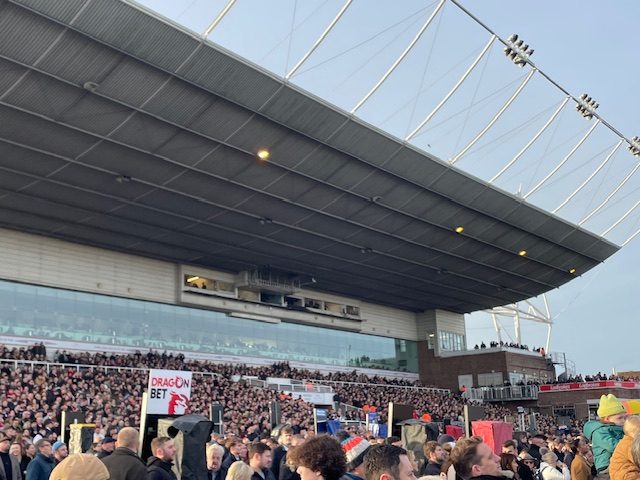
There are racecourses, meetings and individual days when you can do very good business from what appears to be a poor pitch. Equally, a bookmaker can stand in a prime position, take plenty of money and still lose through weak decision-making, poor risk management or a failure to understand the customers in front of them.
Are we going full circle?
It remains to be seen whether the importance of the very best positions will now begin to weaken.
Betting exchanges are less liquid than they once were, particularly away from the biggest races. Regulatory and commercial pressures across the industry have reduced the amount of money available in those markets, while sharper punters are returning to the track.
Bookmakers are therefore less able to hedge the amounts they once could and are increasingly being forced to take a view again. On-course bookmakers are even returning to hedging with one another.
That has the potential to create greater variation in prices and liabilities across the ring. We may see a partial return to the days when one bookmaker is 6/4 because he has laid a horse and the bookmaker next door is prepared to offer 2/1 because he has not.
If genuine price competition returns, a customer may once again have a reason to walk past the first bookmaker and search the ring for better value. That could reduce the advantage of location.
But I would not write off the value of a prime pitch. Convenience is enormously powerful, especially among recreational racegoers, and the betting ring will always be affected by where people naturally congregate and move.
The only constant is change
The number beside your name on a pitch list is hugely important, but it does not guarantee success.
If you are prepared to lay a decent bet, develop an identity, recognise the traditions and values of the battle between bookmaker and punter, concentrate on service and present your joint properly, you can still make a living in one of the toughest games in the world.
You need judgement, discipline and the ability to adapt. You also need to accept that a position which works brilliantly today may be weakened tomorrow by a new bar, a relocated entrance, a change in hospitality arrangements or simply a shift in how racegoers choose to bet.
The landscape of the betting ring never stands still.
Over the years, the game has tamed many a lion who believed that buying top-end pitches would provide a straightforward route to profit. The best location gives you an opportunity, but it cannot make decisions for you.
In the end, survival, nous and the will to win will always count for more than the number painted beside your name.
Most of the bookmakers operating today have all that in spades. I’d like to think that www.dragonbet.co.uk has as well but I guess only time will tell.